
It starts with a small yellow spot. Maybe a little thickening at the edge of your big toe. You ignore it, hoping it will go away. But it doesn’t. Before you know it, you are dealing with brittle, crumbling, discolored nails that you are desperate to hide.
Nail fungus (Onychomycosis) is more than just a cosmetic nuisance; it is a stubborn, embarrassing, and often painful infection that affects millions worldwide. The traditional treatments? They are often worse than the problem itself. Greasy creams that ruin your socks, oral medications that come with a laundry list of liver-damaging side effects, or expensive laser treatments that drain your wallet.
Marketed as a breakthrough in natural nail care, this sleek, pocket-sized Orivelle Anti-Fungal Pen promises to do what messy creams often fail to achieve: deliver powerful, antifungal ingredients deep into the nail bed without the mess. But does it live up to the hype? Is it really possible to clear up stubborn fungus with a pen?
What Is Orivelle Anti-Fungal Pen?
Orivelle Anti‑Fungal Pen is a cosmetic/OTC‑style nail care product that combines multiple plant‑derived ingredients with emollient oils to target common symptoms of nail fungus, such as yellow or brown discoloration, thickened or brittle nails, rough texture, and unpleasant odor. The formula is delivered via a slim pen with a brush or tip applicator, allowing users to apply the solution directly along the nail surface and cuticle areas twice daily without dripping or mess.
The brand positions Orivelle as a non‑prescription, natural option that helps “kill fungal spores,” prevent regrowth, and support new, healthy nail formation over time, although legal disclaimers note it is not intended to diagnose, treat, cure, or prevent any disease. Marketing materials and third‑party reviews repeatedly emphasize that meaningful nail appearance changes still require weeks to months of consistent use because nails must physically grow out.
How Orivelle Anti-Fungal Pen work?
Surface and nail‑bed support
According to official descriptions, Orivelle uses a combination of plant‑based antifungal agents (notably tea tree oil and Lithospermum erythrorhizon) plus nourishing oils and vitamin C to work on two levels:
-
Target fungal micro‑environment: Essential oils and herbal extracts help create a less hospitable environment for fungi at the nail surface and surrounding skin.
-
Support nail regeneration: Emollient oils, antioxidants, and vitamin C support moisture balance and barrier repair so that new nail growth is smoother, clearer, and less brittle.
Because fungal nails usually involve infection beneath and inside the nail plate, Orivelle is designed to penetrate through micro‑channels and along the nail edges with repeated application, bringing actives closer to the affected area.
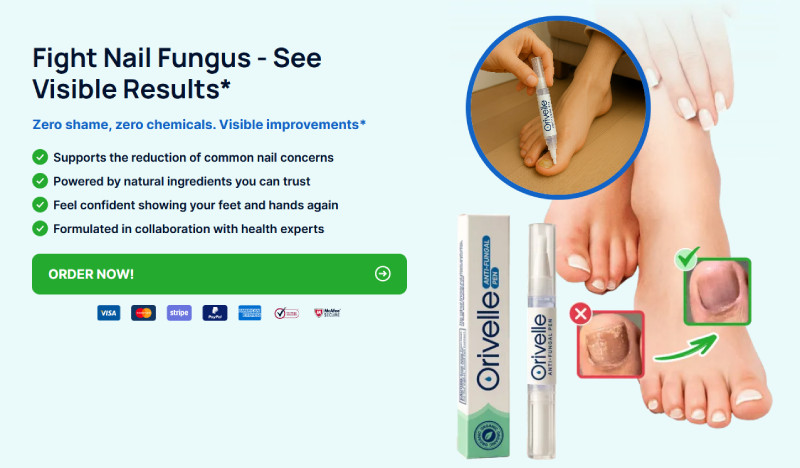
Daily application and gradual results
The recommended use pattern is typically:
-
Clean and dry the affected nail.
-
Apply Orivelle around the nail edges, on the surface, and near the cuticle with the pen tip.
-
Repeat 2–3 times per day, depending on manufacturer instructions.
Independent medical reviewers highlight that any topical nail product—natural or prescription—requires patience because healthy nail tissue must slowly replace damaged areas, which can take several months for toenails. Some promotional sites mention “visible progress in as little as one week,” but more realistic timelines for noticeable improvement are several weeks to multiple months of consistent use.
Orivelle Ingredients and What They Do?
The user‑supplied ingredient list reflects a rich, oil‑based formula designed to combine antifungal activity with intensive nail and cuticle nourishment.
Key antifungal and antimicrobial components
-
Tea Tree Oil: A well‑known essential oil with natural antifungal and antibacterial properties; it contains terpinen‑4‑ol and related compounds that can disrupt fungal cell membranes and inhibit growth in vitro. In Orivelle, it is a primary active aimed at targeting fungal spores and surface colonies.
-
Vitamin C: Included mainly as an antioxidant and support for collagen and tissue integrity; vitamin C may aid in protecting nail and periungual skin from oxidative stress and environmental damage.
-
Lithospermum Erythrorhizon (Gromwell root): Traditionally used in East Asian herbal medicine; it contains shikonin derivatives with reported antimicrobial and anti‑inflammatory effects that may support skin recovery and help prevent secondary infection.
These agents form the core antifungal support while the remaining oils build a nourishing delivery base.
Botanical oils for nail strength and moisture
Orivelle’s long oil list serves to soften, condition, and protect brittle, damaged nails and surrounding skin, which is important because dryness and cracking can worsen fungal penetration.
-
Grape Seed Oil: Lightweight oil rich in linoleic acid and antioxidants; helps moisturize without feeling greasy and may support barrier function.
-
Sweet Almond Oil: Emollient oil that softens cuticles, reduces dryness, and can improve flexibility of brittle nails.
-
Avocado & Camellia Oil: Nutrient‑dense oils containing fatty acids, vitamin E, and phytosterols that nourish nail plates and skin, supporting resilience against splitting and peeling.
-
Shea Butter: Semi‑solid fat that provides occlusive moisture, helping lock in hydration and protect against environmental irritants.
-
Chilean Hazelnut Oil, Meadowfoam Oil, Jojoba Oil, Evening Primrose Oil, Rosehip Oil, Rapeseed Oil: These oils add a spectrum of omega‑3, omega‑6, and omega‑9 fatty acids plus natural antioxidants, supporting elasticity, smoothness, and overall nail health.
-
Peppermint: Often included as peppermint oil or extract; provides a cooling sensation, helps neutralize odor, and may have mild antimicrobial properties, contributing to a fresher feel in cases with fungal‑related odor.
By combining these, Orivelle aims to address both the infection‑prone environment (with antifungal botanicals) and the cosmetic and structural damage (with nourishing oils and butters).
Claimed Benefits of Orivelle Anti-Fungal Pen:
Promotional pages and third‑party reviews highlight several potential advantages:
-
Targets visible symptoms of nail fungus: Yellow/brown discoloration, thickened or crumbly nails, surface roughness, and odor are the primary cosmetic issues Orivelle is designed to improve.
-
Supports healthier‑looking new nail growth: With consistent use, the formula aims to create conditions that favor clear, smoother nail growth as the damaged portion grows out.
-
Moisturizes and strengthens nails: The botanical oil blend helps combat brittleness and dryness, making nails less likely to split or peel.
-
Gentle, plant‑based approach: Orivelle avoids strong synthetic antifungals and harsh solvents; many reviewers note it is free from parabens and aggressive chemicals, making it appealing for those with sensitive skin.
-
Easy, precise application: The pen format fits in a pocket or bag, and the brush tip lets users apply product exactly where needed without spilling or soaking, which improves adherence to a long regimen.
As with any cosmetic or OTC‑style product, individual results vary, and deeper, long‑standing infections may still require prescription intervention.
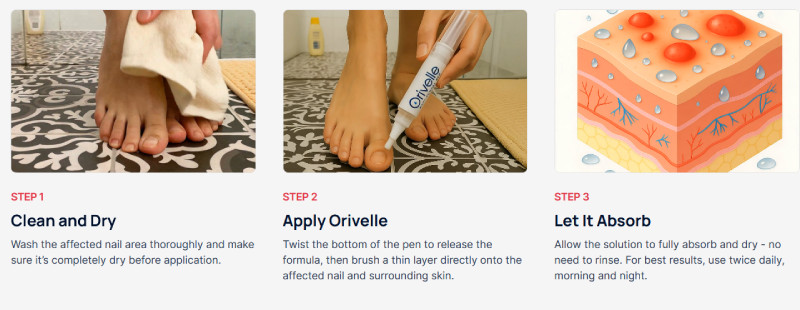
Step-by-Step Guide: How to Use the Orivelle Pen
To get the results promised in the advertisements, you must use the product correctly. “Once in a while” will not kill fungus.
Step 1: Prep the Nail
For the very first application, soak your feet (or hands) in warm water for 10 minutes to soften the nails. Dry them thoroughly. Use a nail file to file down the thickened surface of the infected nail. This thins the barrier, allowing the oil to penetrate deeper.
Step 2: Activate the Pen
Hold the pen vertically. Twist the bottom of the pen until you see the clear liquid serum saturate the brush tip. This might take a few twists on the first use.
Step 3: Apply Generously
Brush the solution over the entire nail surface.
-
Crucial Tip: Don’t just paint the top. Push the bristles under the “free edge” (the tip) of the nail. This is where fungus often lives. Also, coat the cuticle and the skin immediately surrounding the nail.
Step 4: Let it Dry
Wait 2-5 minutes for the serum to absorb before putting on socks or shoes. The formula is designed to dry relatively quickly compared to greasy ointments.
Frequency: Apply twice daily—once in the morning and once before bed.
Safety, Side Effects, and Limitations
General safety profile
Because Orivelle is based on essential oils and cosmetic‑grade plant oils, it is generally marketed as safe, vegan‑friendly, cruelty‑free, and gentle on skin. However, users should keep in mind:
-
Essential oils, including tea tree and peppermint, can cause irritation or allergic reactions in some individuals, especially at higher concentrations or on broken skin.
-
People with known sensitivities to nuts or specific plant oils (e.g., almond, hazelnut, evening primrose) should review the full ingredient list carefully and consider a patch test.
-
The pen is for external use only and should not be applied to open wounds, severely inflamed skin, or ingested.
Realistic expectations and medical context
Several independent reviewers and dermatologist‑led commentaries stress that:
-
No topical—natural or synthetic—can “cure” nail fungus in 5–7 days because the infected nail plate must grow out over months.
-
Marketing claims around very rapid cures, extremely high success rates “better than prescriptions,” or “clinical proof” without clear citations should be treated with skepticism.
-
For severe, painful, or spreading infections, medical evaluation is essential; prescription oral or topical antifungals may be required.
Orivelle can be viewed as a cosmetic and supportive approach that may help the appearance and local environment, but is not a replacement for professional diagnosis or medically indicated therapy.
Pros and Cons of Orivelle Anti-Fungal Pen
Pros
-
Plant‑based formula: Uses natural antifungal and nourishing ingredients rather than harsh synthetic chemicals.
-
Moisturizing and cosmetic benefits: Helps reduce brittleness and dryness while improving nail appearance and smoothness.
-
Easy‑to‑apply pen format: Precise, portable, and mess‑free; fits easily in daily routines at home or while traveling.
-
Suitable for fingernails and toenails: Designed for both hands and feet and for men and women.
-
Refund protection: Many sales pages mention money‑back or satisfaction guarantees, offering some consumer protection if results are unsatisfactory.
Cons
-
Mixed independent reviews and scam concerns: Several deep‑dive reviews and YouTube investigations flag red‑flag marketing tactics, unrealistic cure timelines, and unverified “clinical” claims, suggesting consumers proceed with caution.
-
Not an FDA‑approved medication: It is not regulated as a prescription antifungal and legally states it is not meant to treat or cure disease.
-
Requires long‑term consistency: as with all nail fungus approaches, users must apply it daily for weeks to months; inconsistent use is unlikely to yield good results.
-
May be insufficient for severe infections: Advanced onychomycosis often extends deep into the nail bed and may not respond to cosmetic‐level topicals alone; medical therapy may be needed.
Orivelle vs Typical Nail Fungus Treatments
| Feature | Orivelle Anti-Fungal Pen | Typical OTC/prescription treatments |
|---|---|---|
| Active base | Tea tree oil, Lithospermum erythrorhizon, vitamin C, and botanical oils. | Azoles, allylamines (e.g., terbinafine), urea, keratolytics. |
| Format | Pen with brush tip, plant‑oil vehicle. | Creams, lacquers, solutions, oral tablets. |
| Focus | Cosmetic nail appearance, surface environment, and moisture. | Direct medical treatment of infection (for Rx). |
| Chemicals vs natural | Plant‑based, free of harsh synthetic antifungals. | OTC and Rx often use synthetic actives. |
| Time to see improvement | Marketing: 7–14 days for visible progress; realistic: months. | Usually months; some Rx regimens 3–12 months. |
| Regulatory status | Cosmetic/OTC‑style; not approved as a drug. | Prescription meds FDA‑approved for onychomycosis. |
Brief FAQs About Orivelle Anti-Fungal Pen
Q. What is Orivelle Anti-Fungal Pen used for?
Orivelle Anti‑Fungal Pen is used to improve the appearance of nails affected by fungal infections, including discoloration, thickening, brittleness, rough texture, and odor, through a plant‑based topical formula applied with a pen‑style applicator.
Q. How do you use Orivelle fungus pen?
You typically clean and dry the affected nail, then use the pen to apply a thin layer of solution along the nail surface, edges, and cuticle area, repeating the process 2–3 times per day as directed. Consistent daily application for weeks to months is recommended for the best cosmetic results.
Q. Can I wear nail polish while using the Orivelle Pen?
It is recommended to avoid nail polish during the treatment. Polish acts as a barrier, preventing the serum from absorbing into the nail. If you must wear polish for an event, apply the serum around the cuticle and under the tip, but for best results, keep the nail bare.
Q. How long does Orivelle take to work?
Some marketing claims mention visible improvements within 5–14 days, but dermatology‑based reviews point out that real nail fungus improvement generally requires months because infected nail tissue must grow out and be replaced by healthy nail. Expect gradual changes rather than an overnight cure.
Q. Is Orivelle Anti-Fungal Pen safe?
The pen uses plant‑based ingredients (tea tree oil, vitamin C, and various botanical oils) and is advertised as free from harsh chemicals, making it generally gentle for most users. However, essential oils can irritate sensitive skin, and people with allergies to specific plant oils or nuts should check the ingredient list and consider a patch test; serious infections require medical care.
Q. Can Orivelle replace prescription antifungal treatments?
No. Orivelle is a non‑prescription, cosmetic/OTC‑style product and is not FDA‑approved to treat, cure, or prevent nail fungus. For severe, painful, or persistent onychomycosis, prescription medications or professional procedures under a healthcare provider’s guidance may be necessary.
Q. Is Orivelle safe for diabetics?
Generally, topical natural treatments are safer for diabetics than harsh chemicals. However, foot care is critical for diabetics. You should always consult your physician or podiatrist before starting any new foot treatment.
Q. Where can you buy Orivelle Nail Fungus Treatment Pen?
The brand directs buyers to official regional sites and funnels such as OrivelleAntiFungalPen.com, TryOrivelle.com, and localized domains (e.g., Orivelle‑AU, Orivelle Ireland), sometimes offering discounts and money‑back guarantees. Third‑party retailers and marketplaces also list Orivelle, but users should verify seller legitimacy and warranty/return terms.
Conclusion: Is Orivelle Worth the Investment?
If you are looking for a “magic pill” that will fix your fungus overnight, Orivelle isn’t it (that product doesn’t exist). However, if you are looking for a safe, effective, and hassle-free way to combat nail fungus without risking your health with strong oral medications, the Orivelle Anti-Fungal Pen is a top-tier choice.
Its strength lies in its blend of ingredients. It recognizes that you don’t just want the fungus dead; you want your nails to look beautiful again. By combining powerful antifungals like Tea Tree Oil with premium conditioners like Rosehip and Avocado Oil, it offers a holistic solution that treats, repairs, and protects.
For less than the cost of a pedicure, you can start the journey toward clear, healthy nails. Don’t let another summer go by hiding your feet in the sand.